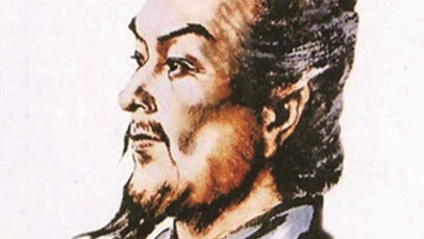
Zhang Heng
Introduction
Zhang Heng (78-139) was an esteemed Chinese inventor, scientist, mathematician, and astronomer during the Eastern Han Dynasty (25-220). Renowned for his wide-ranging contributions to science and technology, Zhang is best known for inventing the first seismoscope, an instrument for detecting earthquakes. His work in astronomy, mathematics, and engineering has left a lasting impact on the development of science in ancient China, and he is celebrated for his innovations and intellectual achievements.
Early Life and Education
Zhang Heng was born in Nanyang, Henan province. From a young age, he demonstrated an aptitude for learning, engaging in studies that spanned multiple disciplines. He was particularly interested in the natural world and the workings of the cosmos, which later influenced his work as an astronomer and mathematician. Zhang was educated in the capital city of Luoyang, where he was exposed to a diverse array of knowledge, which fueled his scientific endeavors.
Achievements in Astronomy
Zhang Heng made significant contributions to astronomy, notably his work on the armillary sphere and his star map. The armillary sphere was an ancient instrument used to model the celestial sphere and was essential for determining the positions of stars and planets. Zhang improved upon existing designs, enhancing their accuracy and functionality. His star map documented over 2,500 celestial bodies, reflecting his meticulous observations of the night sky. Zhang's advancements in astronomy helped lay the groundwork for future astronomical research and understanding.
Mathematical Contributions
Zhang Heng was also an accomplished mathematician. He worked on approximations for pi, one of the fundamental constants in mathematics. His methods for calculating pi were among the most accurate of his time, and his contributions to mathematics extended to areas such as geometry and the properties of circles. Zhang's work demonstrated the interconnectivity between mathematical theories and practical applications, influencing subsequent generations of Chinese mathematicians.
The Seismoscope: An Ingenious Invention
Zhang Heng's most famous invention is the seismoscope, which he created around AD 132. This groundbreaking device was capable of detecting and indicating the occurrence of distant earthquakes. The seismoscope consisted of a large, ornate bronze vessel adorned with dragon and toad motifs. When an earthquake occurred, a mechanism inside the vessel would cause a ball to drop from one of the dragons' mouths into a toad's mouth below, indicating the direction of the tremor. The seismoscope was a remarkable achievement in engineering and played a critical role in the early detection of earthquakes, which was vital for disaster preparedness in ancient China.
Legacy and Influence
Zhang Heng's legacy as a pioneer of science and technology in ancient China is profound. His innovations and discoveries have inspired countless scholars and have earned him a place among the most distinguished figures in Chinese history. Zhang's work exemplifies the spirit of inquiry and the pursuit of knowledge that drove scientific progress in ancient times. His seismoscope, in particular, stands as a testament to his ingenuity and his ability to solve complex problems with practical solutions.








